One of the topics that often comes up when we talk about feeding hay, in particular round bales, is how easily horses can end up standing in one place for long periods of time, munching away with very little movement.
While round bales can be convenient, they can also encourage horses to become quite sedentary if everything they need is in one spot. Encouraging natural movement is one of the simplest and most powerful ways we can support our horses’ overall health, especially for those prone to metabolic or endocrine conditions.
The good news is that small changes to how we manage feeding and paddock environments can make a big difference.
Encouraging Movement with Feeding Stations
A simple strategy is to break up a round bale into smaller hay nets and place them at different “stations” around the paddock. Hanging nets at different heights or spacing them apart encourages horses to move between feeding points rather than staying rooted in one place.
This approach not only increases movement but also begins to introduce ideas similar to a track system.
Track systems are designed to mimic a horse’s natural roaming behaviour. In the wild, horses walk many kilometres each day while foraging, exploring and interacting with their herd. Domestic paddocks often limit this natural movement, but thoughtful paddock design can help encourage more activity.
Small changes—like hanging hay from forked branches, spreading forage around the paddock, or placing resources in different areas—encourage horses to think, explore, and move throughout the day.
And movement matters. Increased activity can have a profound impact on overall health, metabolic function, and even hoof quality.
What Is a Track System?
The concept of track systems became popular through Jaime Jackson, a barefoot hoof care practitioner who developed the “Paddock Paradise” concept after studying wild horse behaviour.
The idea is simple: design paddocks in a way that encourages horses to move between resources such as water, shelter, minerals, and forage. Rather than a single open grazing space, horses follow a track that promotes natural movement and interaction.
These systems can be incredibly beneficial for horses that struggle with conditions such as Equine Metabolic Syndrome (EMS) or insulin resistance, where movement plays a key role in supporting metabolic health.
While a full track system may not be possible for everyone, the principles behind them—encouraging curiosity, movement and natural behaviour—can be applied in almost any paddock.
Enrichment for Horses in Smaller Paddocks
Another question I’m often asked is how to provide enrichment for horses living in smaller paddocks.
Horses are intelligent, social animals that benefit from stimulation and variety in their environment. Without it, boredom and inactivity can quickly set in.
Here are a few simple ideas that can help create a more engaging environment.
Rotating toys and objects
Providing safe toys such as balls, cones or hanging objects can give horses something to interact with throughout the day. Horses often enjoy nudging, pushing or tossing items around.
Rotating these objects regularly helps keep things interesting and prevents them from becoming part of the scenery.
Forage-based enrichment
Slow feeders and hay nets encourage horses to work a little harder for their forage, mimicking natural grazing behaviour.
You can also scatter small amounts of hay, chaff or low-sugar treats around the paddock to encourage foraging and exploration.
This not only promotes movement but can also help slow down eating and support digestive health.
Natural browsing opportunities
Planting horse-safe herbs or plants around paddocks can give horses something interesting to investigate and nibble.
Branches from safe trees can also provide chewing opportunities and enrichment. Many horses enjoy stripping bark or investigating new natural materials.
Obstacles
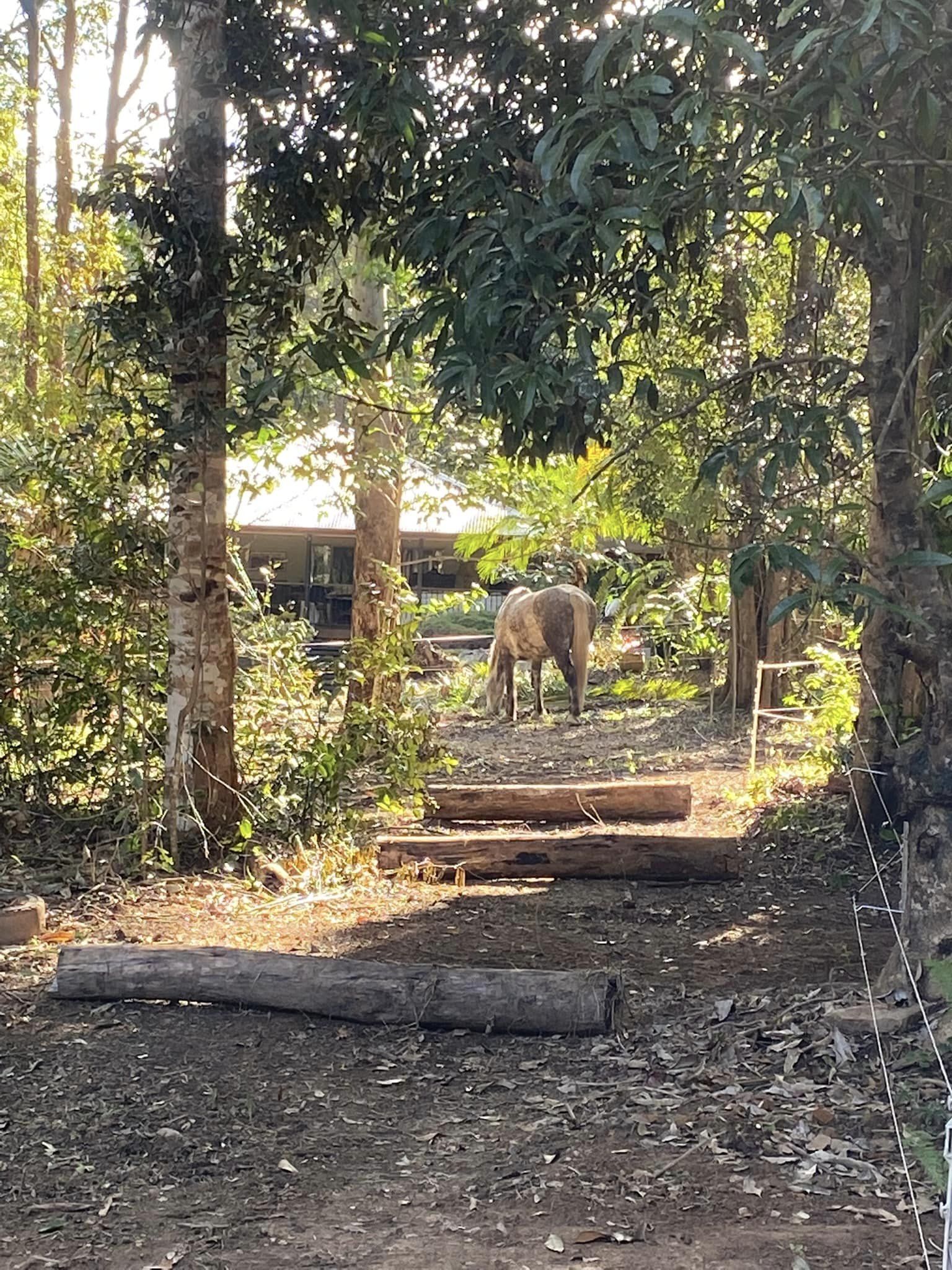
Simple objects such as poles, tyres or logs can encourage horses to step over, walk around or investigate new terrain.
Low platforms or stumps can also promote balance and coordination while giving horses something new to interact with.
Scent enrichment
Horses have a strong sense of smell and can enjoy exploring new scents.
Placing safe herbs or scented objects around the paddock can encourage horses to investigate different areas and use their natural curiosity.
Social interaction
Horses are herd animals and thrive with companionship.
If possible, providing access to other horses—or even compatible companion animals such as goats or sheep—can provide valuable social stimulation. Even being able to see and interact with neighbouring horses can help reduce boredom.
Creating a track system
Even in smaller paddocks, you can create a simplified version of a track system.
By spreading hay, water, minerals and enrichment objects across different areas of the paddock, you naturally encourage horses to move between them.
The goal is simple: keep horses curious, engaged and moving. Toma Harper, Trailblazing Horse Care local to South East Queensland, has some great education and ideas https://www.facebook.com/theactivehorseagistmentplus
Why Movement Matters
Movement plays an important role in many aspects of equine health.
Regular activity supports circulation, metabolism, digestive function and hoof health. For horses prone to endocrine conditions such as EMS or PPID, encouraging daily movement can be particularly beneficial in supporting insulin regulation and overall wellbeing.
It doesn’t have to be complicated. Small environmental changes can add up to significant improvements in how much horses move during the day.
At the end of the day, our horses benefit most when we design their environment with their natural behaviours in mind. Encouraging movement, curiosity and interaction helps support healthier, happier horses—and often stronger hooves as well.
 No products in the cart.